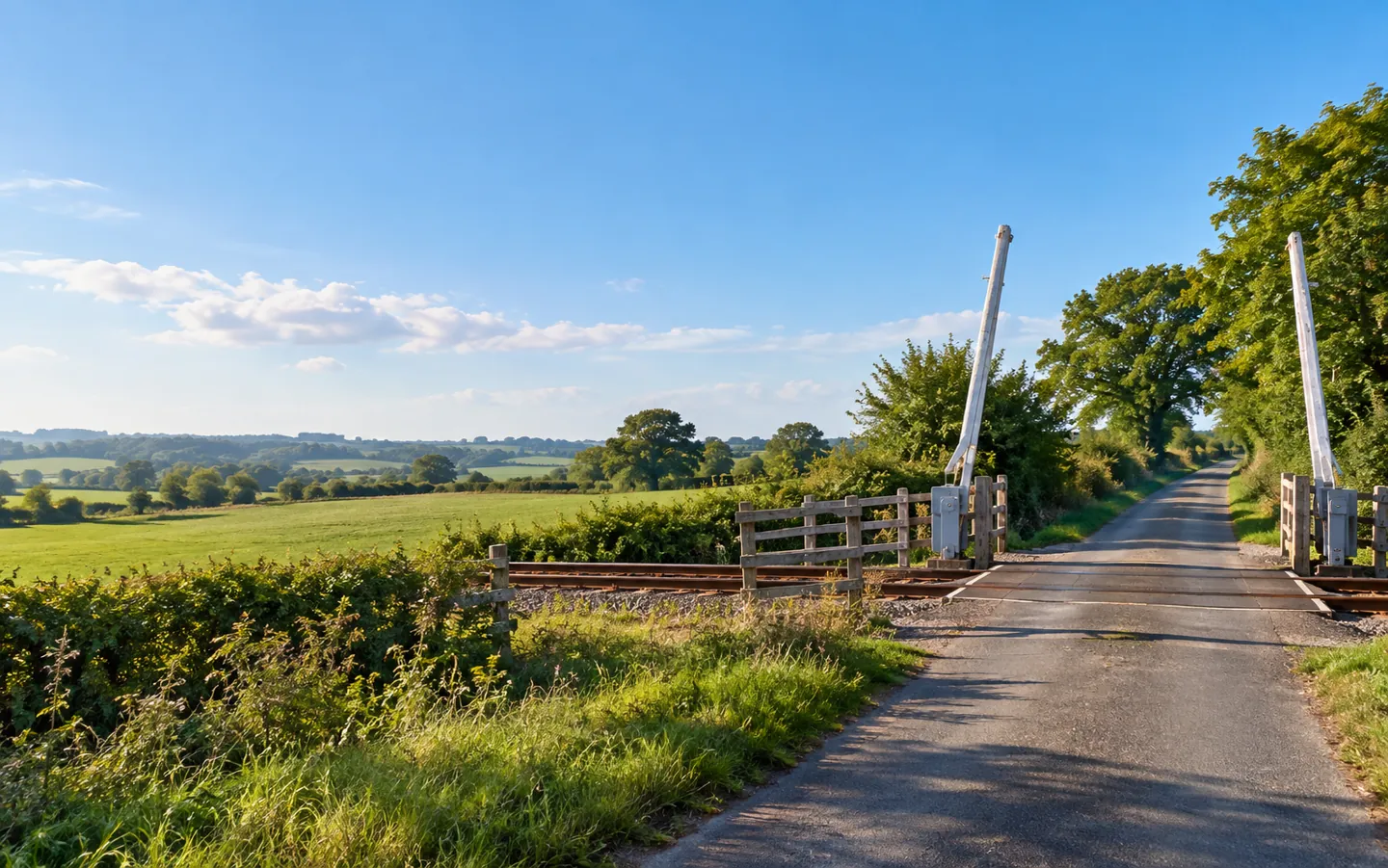
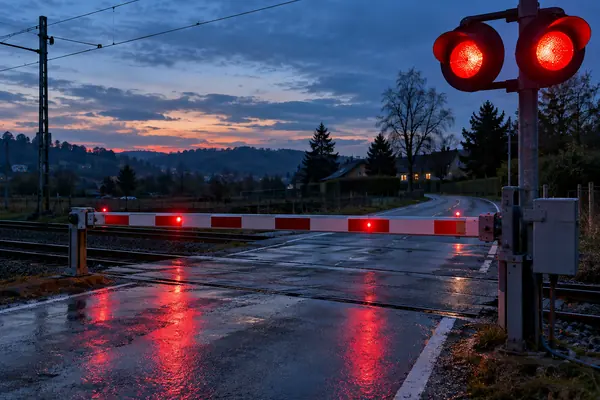
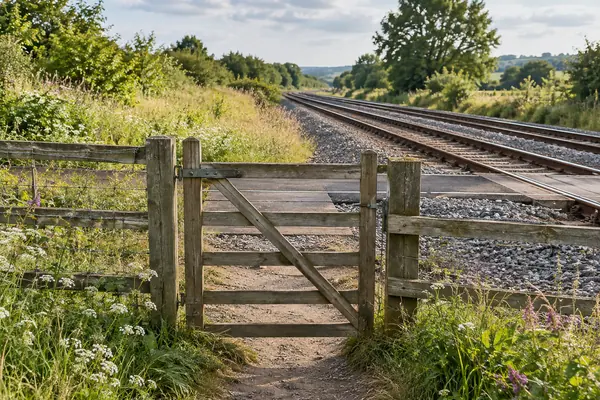
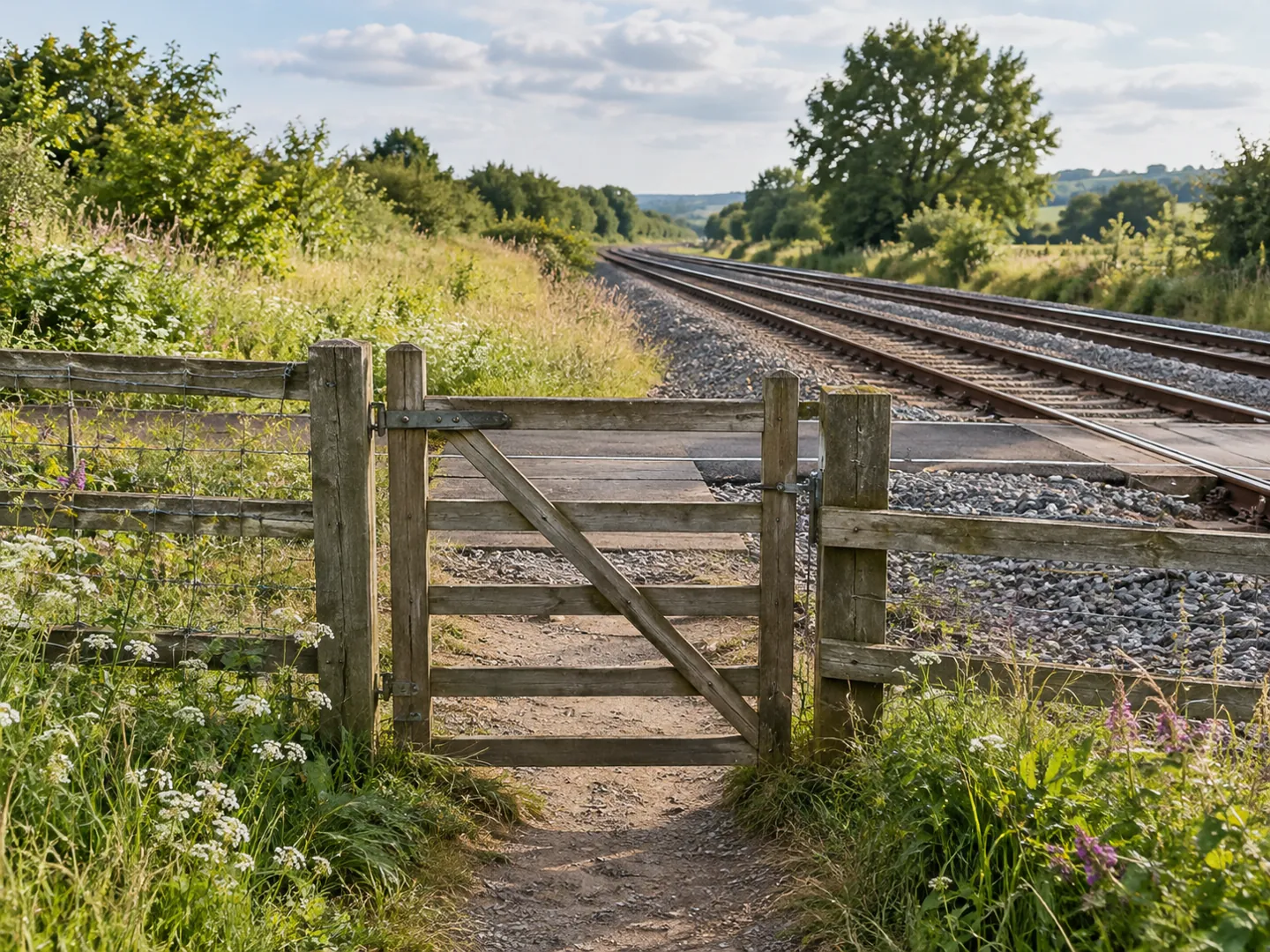
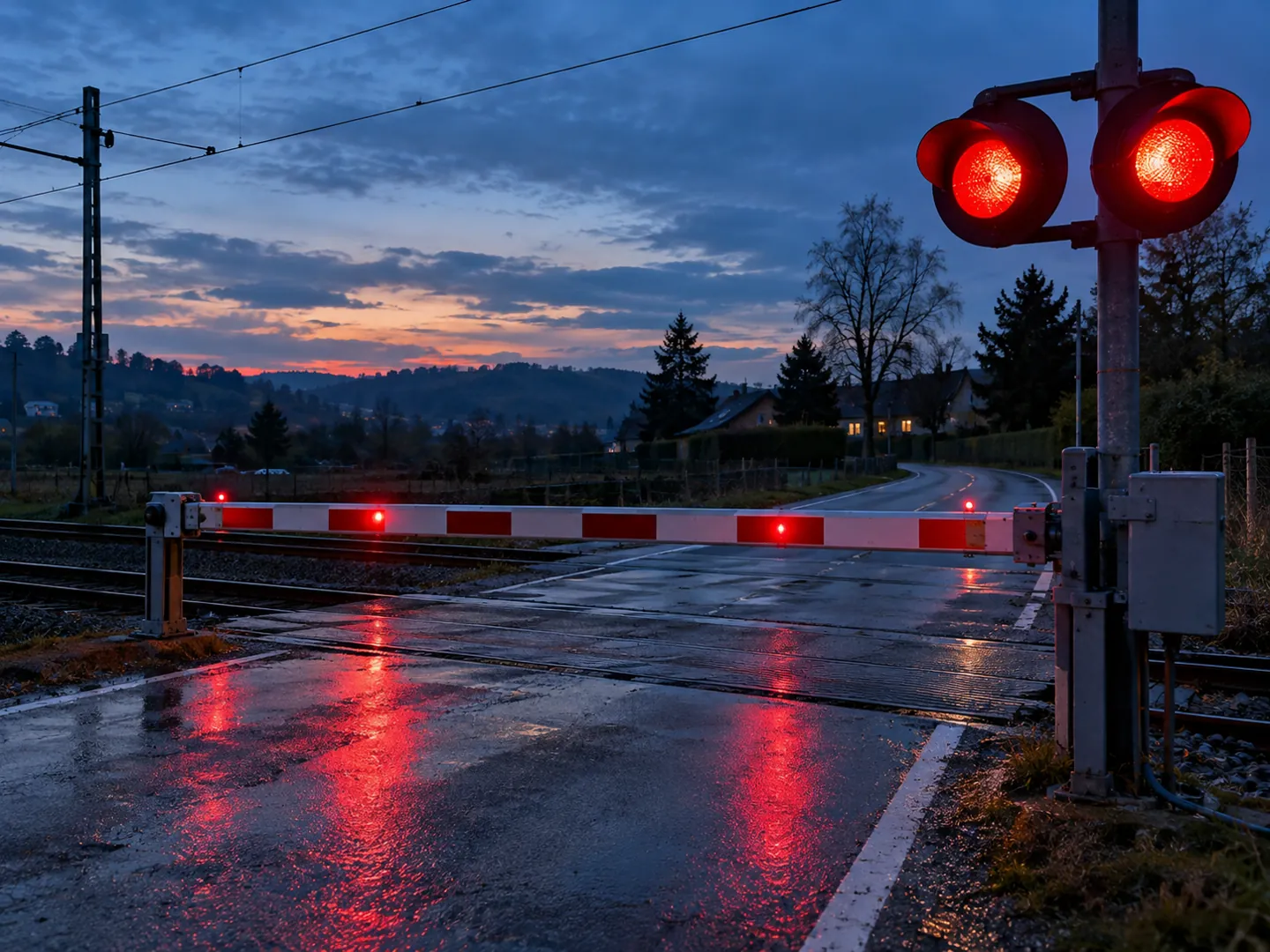
Britain has nearly 6,000 level crossings, where a road or footpath meets the railway at the same level. Some warn you with barriers and lights; others rely entirely on you. Knowing which is which, and what the Highway Code says, keeps you safe.
AI-generated image, not a photograph of a real person or place.
Stop, look, listen
Obey lights and barriers
Never stop on the tracks
No second chances
THE SHORT ANSWER
Obey the warnings, or be the warning.
Active crossings warn you of a train. Passive crossings leave the check to you.
ACTIVE CROSSINGS
Lights, alarms, barriers
Most road crossings have a steady amber light, twin flashing red lights and an alarm. You must stop at the white line, and if the lights keep flashing after a train, another is coming.
Different crossings protect you in different ways. The bar shows how much each type relies on you to check for trains, from the Highway Code and Network Rail.
From the Highway Code rules 291 to 299 and Network Rail's level crossing safety page.
TWO NUMBERS WORTH KNOWING
Thousands of crossings, a mile to stop.
One number on the network, one on a train's brakes.
≈ 6,000
Level crossings in England, Wales and Scotland
Network Rail says there are nearly 6,000. It has closed over 1,400 since 2009, as closing a crossing is the only way to remove the risk completely.
NETWORK RAIL
≈ 1 mile
Emergency stopping distance at 80 mph
In a 2026 survey of 2,001 UK adults, 97% did not realise this. At 125 mph, the top speed on much of the East Coast Main Line, it is over a mile.
NETWORK RAIL · 2026
Network Rail recorded five accidental fatalities at level crossings in 2024/25. The Office of Rail and Road says Britain's crossings are among the safest in Europe but still a significant risk to the public.
CROSSING SAFELY
On foot or at the wheel, four rules.
These come from the Highway Code and Network Rail's advice to level crossing users.
Never stop on the tracks
Don't drive onto a crossing until the road is clear on the other side, and never stop or park on or near a crossing.
Watch for a second train
Check both directions and wait until all tracks are clear. Another train can be hidden from view by a passing one.
Lose the distractions
Headphones, chatting and rushing make it easy to miss a train. Stop, look and listen every time you cross.
If you break down
Get everyone out and clear at once, use the railway telephone if there is one, and only move the vehicle if there is time before a train arrives.
AI-generated image, not a photograph of a real person or place.AI-generated image, not a photograph of a real person or place.
WHY TRAINS CAN'T STOP
55 metres every second.
A Network Rail crossing manager describes a fast train as covering about 55 metres every second. At 125 mph a train covers 100 metres in under two seconds, so an immediate stop is impossible.
To report a safety concern at a level crossing, the Office of Rail and Road points to Network Rail's 24-hour helpline on 03457 11 41 41. Give the crossing's name if you can.
Questions
Questions people ask
What should I do if the amber light comes on as I reach the crossing?
Stop behind the white line. If you have already crossed the white line when the amber light comes on, keep going. Never reverse onto or over a controlled crossing.
Why do the red lights keep flashing after a train has passed?
It means another train will be passing soon. The Highway Code says you must wait until the lights go off and the barriers open.
What if my vehicle touches a height barrier?
Do not continue onto the railway. Overhead electric lines are dangerous, and the clearance is usually 5 metres (16 feet 6 inches) but may be lower.
When should I use the railway telephone?
When a sign tells you to, for example in a large, slow or long low vehicle or when herding animals, and at gated crossings without lights. Call again when clear if asked.
Who is in charge of level crossing safety?
Railway businesses must manage crossing risk; the Office of Rail and Road is the enforcing authority in Great Britain and can act to make a crossing safe.